
Mindful Pooja Space Setup: Your Complete Guide
Create Your Own Combo – Pick 4 Canisters & Save 10%
Get FREE Shipping on orders above ₹499/-!
Create Your Own Combo – Pick 4 Canisters & Save 10%
Get FREE Shipping on orders above ₹499/-!
Create Your Own Combo – Pick 4 Canisters & Save 10%
Get FREE Shipping on orders above ₹499/-!
Create Your Own Combo – Pick 4 Canisters & Save 10%
Get FREE Shipping on orders above ₹499/-!
Create Your Own Combo – Pick 4 Canisters & Save 10%
Get FREE Shipping on orders above ₹499/-!
Create Your Own Combo – Pick 4 Canisters & Save 10%
Get FREE Shipping on orders above ₹499/-!
Create Your Own Combo – Pick 4 Canisters & Save 10%
Get FREE Shipping on orders above ₹499/-!
Create Your Own Combo – Pick 4 Canisters & Save 10%
Get FREE Shipping on orders above ₹499/-!
Create Your Own Combo – Pick 4 Canisters & Save 10%
Get FREE Shipping on orders above ₹499/-!
Create Your Own Combo – Pick 4 Canisters & Save 10%
Get FREE Shipping on orders above ₹499/-!
Creating a sacred space in your home isn't just about following traditions—it's about crafting a personal sanctuary that nurtures your soul and brings peace to your daily life. Whether you're setting up a dedicated prayer room or carving out a small spiritual corner in your apartment, the art of mindful pooja space setup combines ancient wisdom with modern living needs. Your sacred space becomes a bridge between the material and spiritual worlds, offering a refuge where you can connect with your inner self and find balance in our fast-paced lives.
A truly mindful approach to sacred space design goes beyond mere decoration. It involves creating an environment that supports your spiritual journey while honoring the rich traditions passed down through generations.
Mindfulness in spiritual practice means being fully present and intentional with every element you include. Your altar setup at home should reflect your personal connection to the divine while maintaining the sanctity of traditional practices. This involves choosing items that resonate with your spiritual goals and arranging them in ways that promote focus and reverence.
While honoring ancient Vastu principles remains important, modern homes often require creative adaptations. You can maintain the spiritual essence of a traditional pooja room even in contemporary settings by understanding the underlying principles rather than rigidly following every rule. The key lies in balancing authenticity with practicality, ensuring your space serves both your spiritual needs and lifestyle requirements.
The foundation of any meaningful spiritual practice begins with thoughtful space planning. Your environment directly influences your ability to connect with the divine and maintain consistent spiritual practices.
Traditional wisdom suggests placing your spiritual corner in the northeast direction of your home, as this area receives the most positive energy throughout the day. However, if this isn't possible, focus on finding a quiet spot with natural light and minimal distractions. Even a small corner can become sacred when treated with respect and intention.
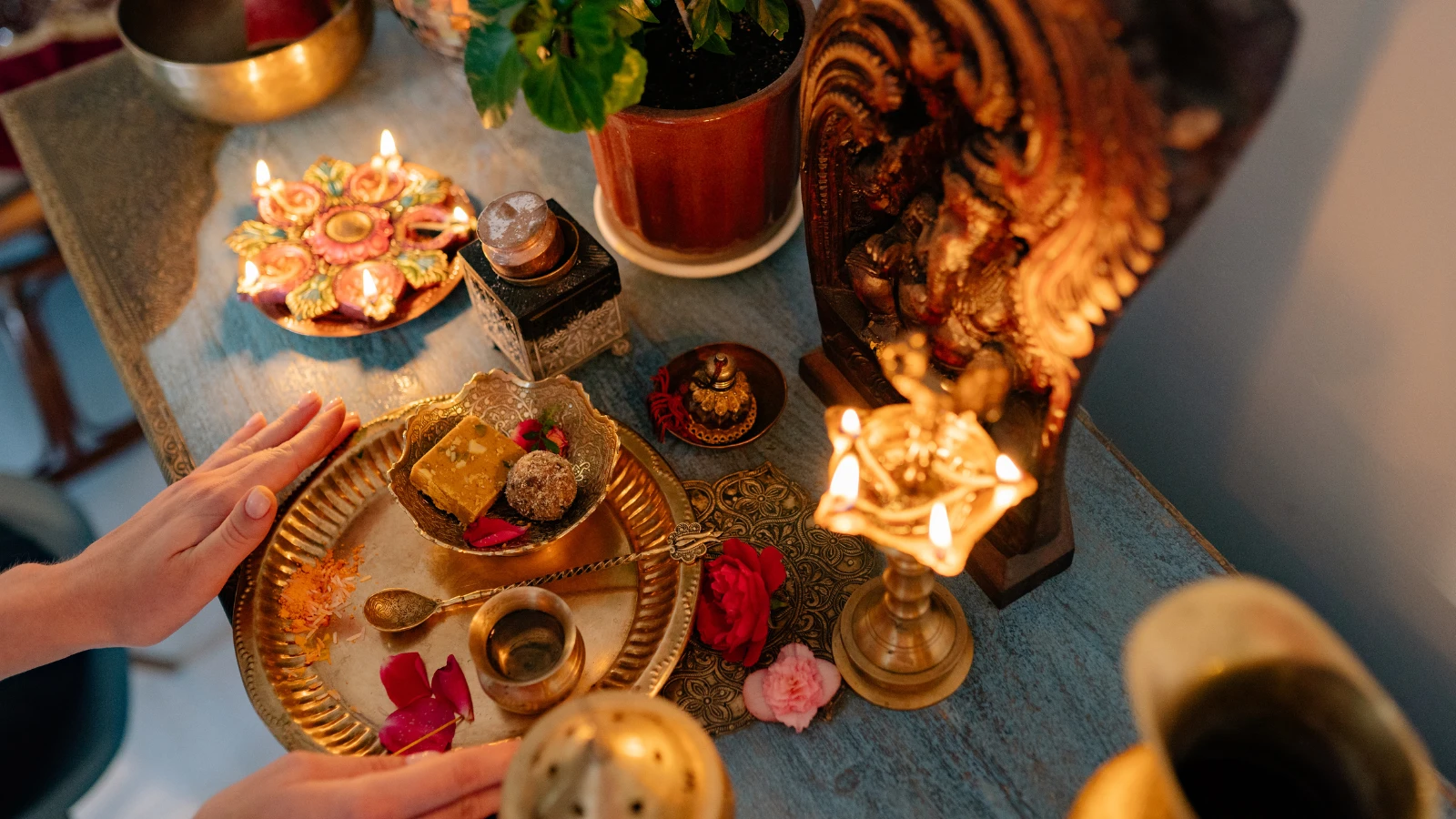
Your altar serves as the focal point of your spiritual practice. Start with a clean, elevated platform that can accommodate your deities, prayer items, and offerings. Consider storage solutions for items like sambrani cups and oil diyas to keep your space organized and clutter-free. Proper lighting enhances the ambiance—natural light during the day and soft artificial lighting for evening prayers work best.
The visual elements of your sacred space play a crucial role in creating the right atmosphere for spiritual practice. Colors, textures, and decorative elements should work together to promote peace and focus.
Traditional colors like saffron, white, and gold carry deep spiritual significance and create a calming environment. Saffron represents purity and spirituality, white symbolizes peace and clarity, while gold brings prosperity and divine energy. You can incorporate these colors through wall paint, fabric, or decorative elements without overwhelming the space.
Natural elements bring life and positive energy to your sacred space. Fresh flowers, especially marigolds and roses, add beauty and fragrance while honoring traditional practices. Consider adding a small tulsi plant, which purifies the air and holds special significance in Hindu traditions. Natural materials like wood, stone, and copper for your panchdhatu diya stand connect you with earth's energy.
Your sacred space should accommodate various spiritual practices beyond traditional pooja rituals. Creating flexibility within your design allows for different types of spiritual engagement throughout the day.
Consider how you'll use your space for different activities—morning prayers, evening meditation, scripture reading, or quiet reflection. A comfortable cushion or small chair can transform your prayer area into a meditation zone. Keep your space adaptable by using moveable elements that can be rearranged as needed.
Engage all your senses to deepen your spiritual practice. Dhoop sticks and dhoop cones create aromatic environments that help focus the mind, while the gentle sound of bells or chimes marks the beginning and end of your practice. Textured prayer beads or smooth stones provide tactile grounding during meditation.
Not everyone has the luxury of a dedicated room for spiritual practice, but this shouldn't limit your ability to create a meaningful sacred space. Creative solutions can transform any area into a spiritual sanctuary.
If you have a dedicated room, focus on creating a complete spiritual environment. Install proper ventilation to allow agnihotra diyas and incense to burn safely. Include storage for seasonal decorations, extra prayer items, and religious texts. Ensure the space remains accessible to all family members while maintaining its sacred nature.
Small spaces require creative thinking but can be equally powerful. Wall-mounted shelves can hold your deities and prayer items, while a small mitti stand can accommodate daily offerings. Foldable elements allow you to expand your practice area when needed and store everything neatly afterward.
Your sacred space should reflect your personal spiritual journey while honoring family traditions. The most meaningful spaces combine inherited wisdom with individual expression.
Include heirloom items, family deities, and traditional elements that connect you to your roots. These pieces carry the prayers and positive energy of previous generations, adding depth and meaning to your practice. Document the stories behind these items to preserve their significance for future generations.
Contemporary mindful home decor can embrace simplicity while maintaining spiritual significance. Clean lines, uncluttered surfaces, and carefully chosen elements create a peaceful environment that supports modern lifestyles. Focus on quality over quantity—a few meaningful items often create more impact than elaborate displays.
You can create a meaningful sacred space in as little as two square feet. The key is intention and organization rather than size. Even a small shelf or corner table can serve as an effective altar when arranged thoughtfully.
Absolutely! Focus on portable elements that don't require permanent modifications. Use removable wall decals, freestanding furniture, and temporary lighting solutions. Many landlords appreciate tenants who maintain clean, respectful spiritual practices.
You can start with basic items like a small platform, simple diyas, and incense for under $50. Build your collection gradually, adding meaningful pieces over time. The spiritual value isn't determined by cost but by the devotion and care you bring to your practice.
Use room dividers, curtains, or screens to create visual separation. Establish quiet hours with roommates or family members, and consider portable setups that can be moved to private areas when needed. Communication and respect usually resolve most sharing challenges.
Traditional guidelines suggest facing east or north while praying, with the altar placed accordingly. However, if your space doesn't allow this, focus on creating a clean, respectful environment. The sincerity of your practice matters more than perfect directional alignment.
Seasonal changes keep your space fresh and aligned with natural cycles. Update flowers weekly, deep clean monthly, and consider adding new elements for festivals or special occasions. Regular maintenance shows respect for your sacred space and keeps your practice vibrant.
Creating a mindful pooja space is a deeply personal journey that evolves with your spiritual growth. Whether you're working with a grand traditional room or a modest corner, the most important element is the love and intention you bring to the space. Your sacred area becomes a reflection of your inner spiritual landscape—a place where daily stresses fade away and divine connection flourishes. Remember that the most beautiful spaces are those that support consistent practice and genuine devotion, regardless of their size or elaborate decoration.
