
Crafting Sambrani Cups: A Complete Step-by-Step Guide
Create Your Own Combo – Pick 4 Canisters & Save 10%
Get FREE Shipping on all prepaid orders above ₹499/-!
Create Your Own Combo – Pick 4 Canisters & Save 10%
Get FREE Shipping on all prepaid orders above ₹499/-!
Create Your Own Combo – Pick 4 Canisters & Save 10%
Get FREE Shipping on all prepaid orders above ₹499/-!
Create Your Own Combo – Pick 4 Canisters & Save 10%
Get FREE Shipping on all prepaid orders above ₹499/-!
Create Your Own Combo – Pick 4 Canisters & Save 10%
Get FREE Shipping on all prepaid orders above ₹499/-!
Create Your Own Combo – Pick 4 Canisters & Save 10%
Get FREE Shipping on all prepaid orders above ₹499/-!
Create Your Own Combo – Pick 4 Canisters & Save 10%
Get FREE Shipping on all prepaid orders above ₹499/-!
Create Your Own Combo – Pick 4 Canisters & Save 10%
Get FREE Shipping on all prepaid orders above ₹499/-!
Create Your Own Combo – Pick 4 Canisters & Save 10%
Get FREE Shipping on all prepaid orders above ₹499/-!
Create Your Own Combo – Pick 4 Canisters & Save 10%
Get FREE Shipping on all prepaid orders above ₹499/-!
Have you ever wondered about the ancient art behind those fragrant sambrani cups that fill your home with sacred smoke? These traditional incense cups have been crafted for centuries using time-honored methods that blend spiritual significance with natural ingredients. From the sacred benzoin resin to the careful molding process, creating sambrani cups is both an art and a science. Whether you're curious about traditional handmade techniques or modern manufacturing methods, understanding how these dhoop cups come to life reveals the beautiful intersection of ancient wisdom and practical craftsmanship.
Sambrani cups hold a special place in Indian spiritual traditions. These small, cone-shaped incense cups are made primarily from benzoin resin, known as sambrani in Sanskrit. When lit, they release aromatic smoke that purifies the air and creates a peaceful atmosphere perfect for meditation and prayer. The spiritual significance of these dhoop cups goes back thousands of years. Ancient texts mention their use in Vedic rituals, where the sacred smoke was believed to carry prayers to the heavens. The sambrani benefits extend beyond just fragrance - they're said to ward off negative energy, improve air quality, and enhance mental clarity during spiritual practices.
Traditional sambrani cups were handcrafted by skilled artisans using simple tools and natural ingredients. Modern production has introduced machinery and standardized processes, but many manufacturers still honor the original recipes and methods.
Natural incense like sambrani offers pure, chemical-free aromatherapy. Unlike synthetic alternatives, these traditional formulations provide authentic spiritual fragrance without harmful additives or artificial scents.
The magic of sambrani cups lies in their carefully selected ingredients. Each component plays a crucial role in creating the perfect burning experience and aromatic profile. Benzoin resin forms the heart of every sambrani cup. This golden-brown resin comes from the Styrax benzoin tree and provides the characteristic sweet, vanilla-like fragrance. Quality benzoin should be pure, free from adulterants, and properly aged for optimal aroma.
Natural binders hold the cup together during burning. Traditional recipes use: • Gum arabic or other plant-based adhesives • Makko powder (derived from tree bark) • Natural clay or charcoal powder • Cow dung powder (in sacred formulations)
The dhoop ingredients often include complementary fragrances: • Frankincense for purification • Sandalwood powder for calming effects • Rose petals for emotional balance • Jasmine for spiritual elevation • Gugal resin for medicinal properties
Many traditional recipes incorporate blessed materials like dried temple flowers, sacred herbs, and cow dung. These ingredients add spiritual significance and are believed to enhance the purifying properties of the incense for meditation.
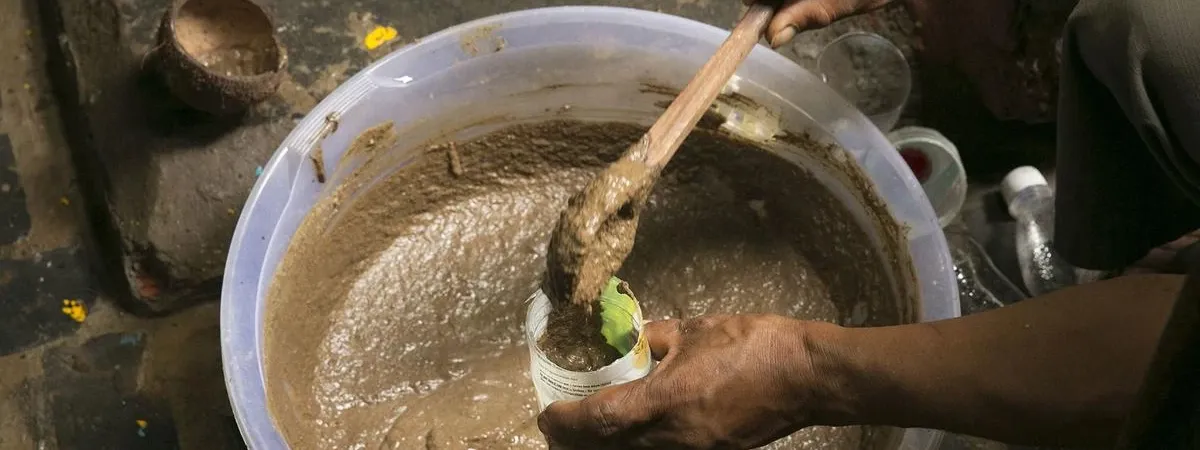
The traditional method of creating sambrani cups is a meditative process that requires patience and skill. This ancient technique produces cups with superior burning qualities and authentic fragrance profiles. First, the benzoin resin is ground into fine powder using stone mortars. The grinding process must be gentle to preserve the aromatic oils within the resin. Skilled craftsmen can tell when the powder reaches the perfect consistency by its texture and smell.
The powdered sambrani is mixed with binding agents in precise ratios. Too much binder makes the cups burn too slowly, while too little causes them to crumble. Master craftsmen adjust these ratios based on humidity, resin quality, and intended use.
The mixture is pressed into small molds using wooden tools or simple hand presses. Traditional molds are made from brass or wood and create the characteristic cup shape that allows for proper air circulation during burning.
Freshly molded cups are placed in shaded areas for sun-drying. This process can take 24-48 hours depending on weather conditions. Proper drying ensures the cups maintain their shape and burn evenly without cracking.
Today's sambrani cups production combines traditional wisdom with modern efficiency. Automated processes ensure consistent quality while maintaining the authentic character of handmade products. Modern facilities use specialized mixing machines that blend ingredients uniformly. These machines can process larger quantities while maintaining the precise ratios essential for quality dhoop cups. Temperature and humidity controls ensure optimal mixing conditions year-round.
Pneumatic presses shape thousands of cups per hour with consistent density and dimensions. These machines apply precise pressure to create cups that burn evenly and maintain structural integrity during packaging and transport.
Modern production includes rigorous testing phases: • Burn time consistency checks • Fragrance intensity measurements • Structural integrity tests • Moisture content analysis • Visual inspection for defects
Contemporary manufacturers prioritize sustainable packaging using recyclable materials and minimal plastic. Many companies have adopted biodegradable packaging that aligns with the natural philosophy behind natural incense products.
Different types of sambrani cups serve various purposes, from daily worship to specific therapeutic applications. Each variety requires unique preparation methods and ingredient combinations. Cow dung sambrani represents the most traditional and sacred variety. The cow dung is first dried, powdered, and mixed with sambrani resin. This combination is believed to have powerful purifying properties and is often used in Agnihotra ceremonies and Vedic rituals.
Used temple flowers are collected, dried, and ground into powder before mixing with sambrani. This creates a unique fragrance profile while giving new life to sacred offerings. The process requires careful handling to preserve the spiritual essence of the flowers.
Special sambrani cups for hair care include herbs like neem, fenugreek, and curry leaves. These ingredients are processed separately and added to the base mixture in specific proportions to maximize their beneficial properties.
Identifying well-made sambrani cups requires understanding their physical characteristics and burning properties. Quality cups should have a uniform color, smooth texture, and pleasant natural fragrance even before lighting. Proper burning technique enhances the incense for meditation experience. Place the cup on a heat-resistant surface, light the top edge, and allow it to catch fire briefly before blowing out the flame. The cup should smolder steadily, producing aromatic smoke for 15-20 minutes.
Always use sambrani cups in well-ventilated areas and never leave them unattended. Keep away from children, pets, and flammable materials. Use appropriate stands or holders designed for incense cups to prevent heat damage to surfaces.
Store sambrani cups in airtight containers away from moisture and direct sunlight. Proper storage maintains their fragrance potency and prevents crumbling. Well-stored cups can retain their quality for several years.
Traditional sambrani cups are made by grinding benzoin resin into fine powder, mixing it with natural binders like gum arabic or makko powder, adding aromatic herbs, molding the mixture into cup shapes using wooden tools, and sun-drying for 24-48 hours until completely hardened.
The primary ingredients include benzoin resin (sambrani), natural binding agents like gum arabic or tree bark powder, aromatic herbs such as sandalwood and frankincense, and sometimes coal powder or charcoal-free alternatives for better burning properties.
Commercial varieties typically contain pure benzoin resin, standardized binding agents, quality-controlled aromatic additives like frankincense and gugal, and may include coal powder for consistent burning, though many premium brands now offer charcoal-free formulations.
Sambrani comes from the Styrax benzoin tree, native to Southeast Asia. The resin is extracted by making incisions in the bark, allowing the sap to harden into amber-colored chunks, which are then collected, cleaned, and ground into powder for incense production.
Yes, you can make basic sambrani cups at home using a mortar and pestle to grind resin, mixing bowls for combining ingredients, small molds or bottle caps for shaping, and a sunny spot for drying the finished cups.
Sambrani cups specifically contain benzoin resin as the primary ingredient and have a sweet, vanilla-like fragrance, while regular dhoop cups may use various base materials like charcoal, wood powder, or different resins, resulting in different burning characteristics and aromas.
Understanding how sambrani cups are made reveals the beautiful blend of ancient wisdom and practical craftsmanship that goes into these sacred incense cups. Whether created through traditional hand methods or modern manufacturing, quality sambrani cups maintain their spiritual significance and therapeutic benefits. The careful selection of natural incense ingredients, proper mixing ratios, and appropriate drying techniques all contribute to creating products that enhance meditation, purify spaces, and connect us to centuries-old spiritual traditions. As you light your next sambrani cup, you'll appreciate the skill and devotion that went into crafting this simple yet powerful tool for spiritual practice.
